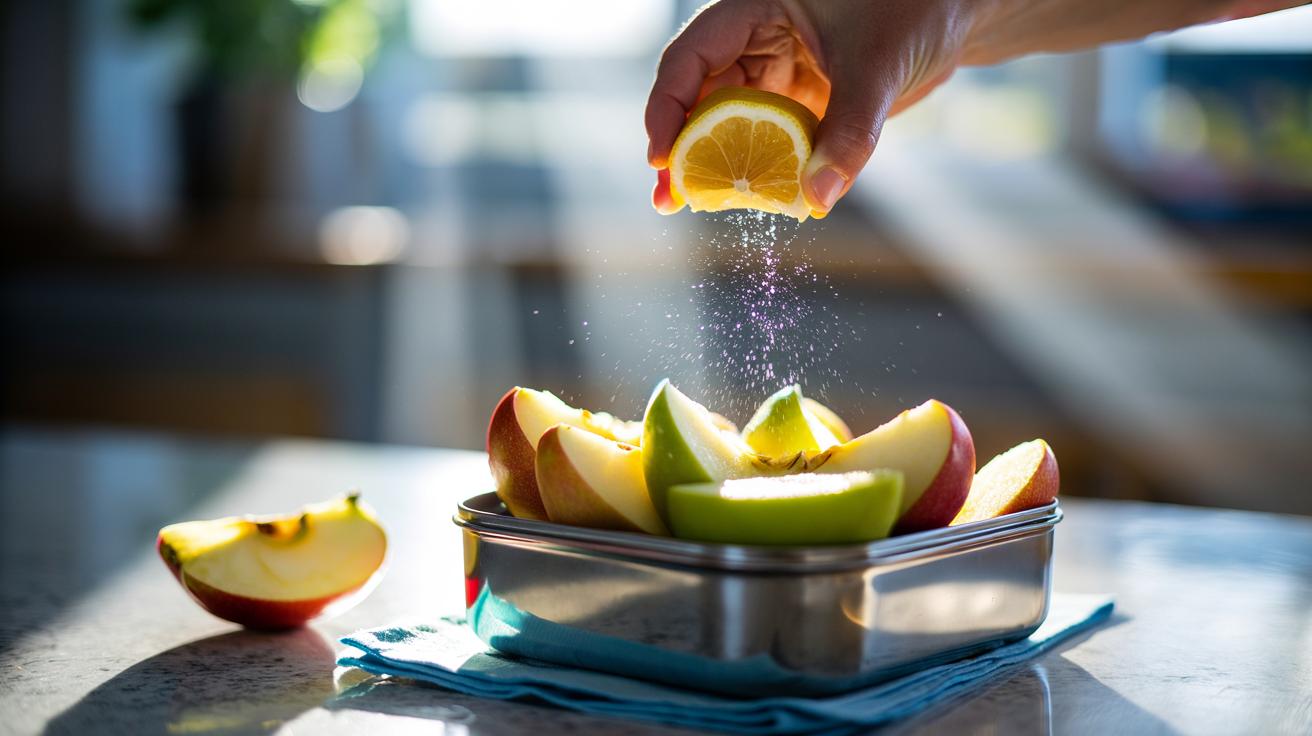
Opening a school bag and seeing a pile of brown, mushy apple pieces is enough to ruin a morning. The good news is that a simple splash of citrus, backed by solid food‑science, can keep fruit looking fresh for most of the school day. Below is a practical, down‑to‑earth rundown of why apples brown, how lemon juice intervenes, and which methods work best when you’re racing against the clock.

Why apple slices turn brown
When you cut an apple you rupture thousands of cells. Inside each cell sit phenolic compounds that, once exposed to oxygen, become the raw material for a cascade called enzymatic browning. The key player is polyphenol oxidase (PPO), an enzyme that contains a copper atom at its active site.
- Oxygen meets phenols – The open surface allows O₂ to bind to PPO.
- PPO converts phenols to quinones – These unstable molecules quickly polymerise.
- Quinones become melanin‑like pigments – The result is the familiar rust‑brown colour.
The speed of this reaction is not uniform. Factors that matter most are:

- Variety – Some apples, such as Pink Lady or Granny Smith, have lower PPO activity.
- Ripeness – Over‑ripe fruit has more free phenols and a softer texture, which accelerates browning.
- Temperature – Warm environments double the reaction rate, while refrigeration can slow it down ten‑fold.
The brown colour does not mean the apple is unsafe; it simply loses crispness and sweetness, making it less appealing to a child’s palate.
How lemon juice stops the clock
Lemon juice works on three chemical fronts, each of which interferes with the PPO pathway.

- pH reduction – Citric acid drops the surface pH to roughly 2.5–3.0. PPO’s optimal activity is near neutral (pH ≈ 7); below pH 3.5 the enzyme is essentially “asleep.”
- Antioxidant action – Ascorbic acid (vitamin C) present in lemon juice is a powerful reducing agent. It turns the brown‑forming quinones back into their original phenols before they can polymerise.
- Metal chelation – Citric acid also binds the copper ion in PPO’s active site, depriving the enzyme of a crucial co‑factor.
When all three mechanisms act together, the browning reaction is delayed dramatically without having to cook or freeze the fruit.
The most reliable lemon‑water mixture
A balanced, easy‑to‑remember recipe is:

- 1 tablespoon (≈ 15 ml) freshly squeezed lemon juice
- 250 ml cold water (about 1 cup)
Mix the solution in a clean spray bottle or shallow bowl. The dilution keeps the flavor bright but not overpowering, preserving the apple’s natural sweetness.
Application steps
- Cut the apple – Slice into wedges or sticks of about 1‑inch thickness. Thicker pieces expose less surface area.
- Spray or dip – If you have a spray bottle, mist both sides for 5‑7 seconds. For larger batches, submerge the slices for 20‑30 seconds; do not let them sit longer than a minute or they may become waterlogged.
- Drain and pat dry – Transfer slices to a clean kitchen towel or paper towel and gently press to remove excess liquid. A light surface coating is enough; you don’t want a soggy mouthfeel.
- Pack cold – Place the treated slices into an airtight container with a small ice pack or a chilled insulated lunch bag.
If the apples you’re using are especially tart (e.g., Granny Smith), you may halve the lemon amount to ½ tablespoon per 250 ml water and still see a solid colour benefit.

Alternative treatments when lemons are out of reach
While lemon is the gold standard, several other kitchen staples can also hinder PPO. Choose one based on what you have on hand and how much flavour you’re willing to sacrifice.
| Treatment | Approx. pH | How to use | Expected colour preservation (chilled) |
|———–|————|————|—————————————–|
| 0.5 % saline solution | 6.0–6.5 | Dip 30 seconds, rinse briefly with clean water | 4–6 hours |
| Honey‑water (2 tsp honey per 250 ml) | 3.5–4.0 | Dip 30 seconds, blot dry | 4–8 hours |
| Pineapple juice (undiluted) | 3.0–3.5 | Spray or dip, blot dry | 6–9 hours |
| Orange juice (diluted 1:1 with water) | 3.2–3.6 | Spray, wait 10 seconds, blot | 5–8 hours |
| Vitamin C tablet dissolved in 250 ml water (≈ 500 mg) | 2.8–3.0 | Dip 20‑seconds, blot | 6–10 hours |

All alternatives follow the same basic routine: brief contact, quick drainage, and cold storage. Taste will vary; honey adds a subtle sweetness, while saline can leave a faint salty aftertaste if not rinsed.
Picking the right apple for the job
Even before you treat the fruit, the variety you choose will influence how long it stays crisp.

- Pink Lady – Medium‑sweet, firm flesh, low PPO, excellent for school lunches.
- Jazz – A hybrid with a crisp texture and a natural tartness that pairs well with lemon.
- Granny Smith – Very tart, high acidity already; may need less lemon but is prone to softening if stored too long.
- Honeycrisp – Ultra‑crunchy but higher sugar content; browns a bit faster, so treat it immediately after cutting.
If you can, buy apples that are firm to the touch and free of bruises. A quick “snap test” (press gently near the stem) can help you gauge firmness.
Storage hacks that complement the acid treatment
- Minimise headspace – Fill the container almost to the top, then seal. Less air means less oxygen for PPO.
- Use a paper towel liner – A thin, absorbent layer absorbs excess moisture that otherwise creates a humid micro‑environment for browning.
- Add a second barrier – A second, smaller airtight bag inside the main container creates a double seal and further limits oxygen ingress.
- Keep it cold – Even a modest drop to 4 °C (39 °F) dramatically slows enzymatic activity. A reusable gel pack or a frozen water bottle works well in a standard lunchbox.
- Re‑spritz if needed – If the lunch will be stored for longer than 6 hours, give the slices a quick second spray just before packing (the extra moisture is negligible compared with the colour benefit).
Quick‑reference table
- Method | Dilution | Application | Time to noticeable browning (chilled) | Flavour impact
- Lemon‑water (1 tbsp/250 ml) | 1 : 16 | Spray or 30 s dip | 6–10 h | Light citrus
- Undiluted lemon juice | 1 : 0 | Brush, blot immediately | 8–12 h | Noticeably tart
- Saline (0.5 %) | 1 : 200 | 30 s dip, rinse | 4–6 h | Neutral (if rinsed)
- Honey‑water | 2 tsp/250 ml | Dip, blot | 4–8 h | Mild sweetness
- Pineapple/orange juice | Undiluted or 1 : 1 | Spray/dip, blot | 6–9 h | Tropical notes
- Vitamin C solution | 500 mg/250 ml | Dip 20 s, blot | 6–10 h | Neutral
Pick the option that best matches the taste preferences of the eater and the length of the journey.

Putting it all together: a routine for busy mornings
- Prep the night before (optional) – If you’re a night‑owl, cut the apples, give them a quick lemon dip, pat dry, and store in a sealed bag in the fridge. In the morning you’ll only need to transfer them to the lunchbox.
- Morning blitz – With a spray bottle pre‑filled, cut the apples, give a 5‑second mist, and place them straight into the insulated container.
- Add the chill factor – Slip a frozen gel pack into the lunchbox.
- Seal and go – Ensure the lid clicks shut; a loose lid lets oxygen creep in during the commute.
With this workflow you can reliably serve bright, crisp apple wedges from the first bell to the last.
Frequently Asked Questions
1. Can I use bottled lemon juice instead of fresh?
Bottled juice contains preservatives that may affect flavour, but the citric acid and vitamin C are still present, so it works fine for colour control. Fresh juice gives a brighter taste.

2. Will the lemon treatment make the apple soggy?
Only if you soak the slices for too long. A brief dip or light spray followed by pat‑drying leaves just enough liquid to protect the surface without creating excess moisture.
3. My child doesn’t like sour taste. How can I reduce the tang?
Dilute the lemon juice more (e.g., ½ tbsp per 250 ml water) or add a pinch of sugar or honey to the solution. The added sweetness balances the acidity while still lowering pH enough to inhibit PPO.

4. Are there any health concerns with repeatedly consuming lemon‑treated apples?
The amount of lemon juice per serving is minimal—well within normal dietary limits for citric acid and vitamin C. For children with severe acid reflux, you might prefer the milder saline or honey‑water methods.
5. How long can I keep the treated apples in the refrigerator before the colour starts to fade?
Even when stored at 4 °C, the protective effect wanes after about 24 hours. For best results, prepare slices within 12 hours of the intended eating time.
Disclaimer: The information provided in this article is for general educational purposes only. Individual results may vary based on apple variety, storage conditions, and personal taste preferences. The author and publisher are not liable for any adverse reactions or food safety issues that may arise from following the described methods.