Introduction
Mercedes‑Benz has lifted the veil on the 2025 Vision AVTR, a concept that pushes the boundaries of electric mobility while borrowing visual cues from the world of Pandora. The latest iteration refines previous sketches, adds a more powerful drivetrain and introduces an organic, graphene‑based battery pack that promises to reshape how high‑performance EVs are built. In this article we break down every major update, explore the technology that underpins the vehicle, and consider what the Vision AVTR tells us about the future of luxury, sustainability and driver interaction.
Design Philosophy – Learning From Nature
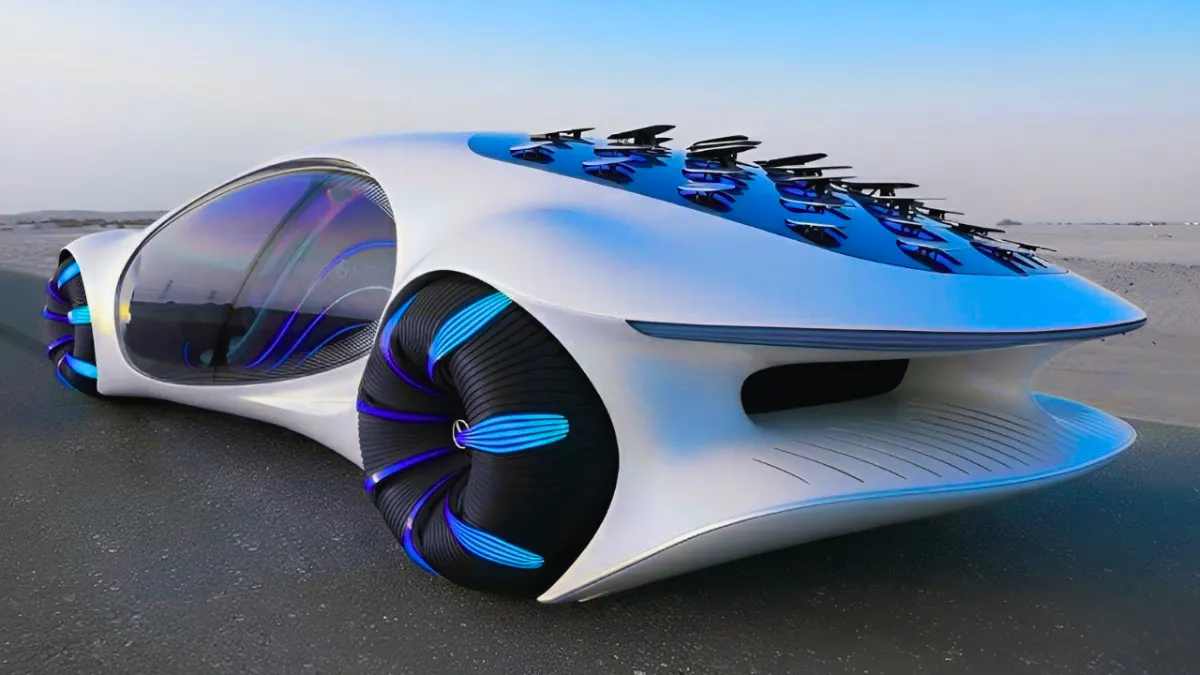
The exterior of the Vision AVTR reads like a living organism. A fluid, almost skeletal frame is wrapped in semi‑transparent panels that shift hue according to ambient lighting. Thirty‑three autonomous “bionic flaps” line the rear deck, each capable of independent rotation. When the car accelerates, the flaps open to channel air to a bespoke thermal management system, then close to smooth the airflow and reduce drag.

Mercedes describes this as “car‑to‑environment communication,” a concept that extends beyond aerodynamics. The vehicle’s shape reacts to wind, rain and even pedestrian proximity, subtly altering surface curvature to convey intent. The result is a silhouette that feels responsive and organic, echoing the symbiotic relationship between the Na’vi and their world in the film that inspired the project.
Powertrain and Performance
Under the sculpted skin lies a multi‑motor electric powertrain delivering a combined 469 horsepower. Two axles house individual torque‑vectoring motors, and a third rear‑center motor assists during rapid acceleration. The system distributes torque in real‑time, ensuring optimal grip on both dry tarmac and wet surfaces.

Performance figures released by Mercedes‑Benz include:
- 0–60 mph in 3.2 seconds
- Top speed limited to 155 mph for safety, though the drivetrain is capable of higher velocities in a test environment
- Continuous torque of 650 Nm, with peak output available for short bursts
The all‑wheel‑drive layout is paired with a predictive AI that learns driving habits, road conditions and load distribution, adjusting power delivery to maximise efficiency without sacrificing the dynamic feel expected of a performance sedan.

Organic Battery Technology
Perhaps the most groundbreaking element is the battery pack. Instead of conventional lithium‑ion cells, the Vision AVTR uses an organic, graphene‑infused polymer that can be manufactured without rare‑earth metals. The cells are housed in a lightweight, recyclable frame that integrates directly into the vehicle’s chassis, lowering the centre of gravity and freeing up interior space.
Key attributes of the graphene battery include:

- Energy density of roughly 350 Wh/kg, surpassing most current EV cells
- Fast‑charge capability of 80 % capacity in under 20 minutes using a 350 kW DC charger
- Full cycle life exceeding 2,000 charge‑discharge cycles before capacity drops below 80 %
- End‑of‑life recyclability of over 95 %, with the organic components designed to break down into harmless by‑products
Mercedes‑Benz positions this as a stepping stone toward a zero‑impact power source for future production models, aligning with the company’s broader carbon‑neutrality goals for 2039.
Interior – Neural‑Link Controls and Sustainable Materials
Step inside, and the cabin feels more like a personal habitat than a car cockpit. The steering wheel is absent; drivers interact using a combination of hand gestures, eye‑tracking and biometric feedback. A thin, curved touch surface stretches across the dashboard, translating finger motions into steering, acceleration and braking commands.

Biometric sensors embedded in the seat and steering console monitor heart rate, respiration and skin temperature, feeding the data to an AI that can adjust climate control, seat firmness and even suggest optimal driving routes based on driver fatigue.
Materials throughout the interior are sourced from renewable or recycled streams:

- Upholstery made from plant‑based leather alternatives, dyed with water‑based inks
- Trim pieces carved from reclaimed ocean‑plastic composites
- Ambient lighting that mimics natural sunrise and sunset cycles, helping maintain circadian rhythms during long trips
The overall design aims to blur the line between driver and vehicle, creating a symbiotic interface that feels intuitive and immersive.
Sustainability at the Core
Beyond the battery and interior, the Vision AVTR embraces sustainability at every stage of its lifecycle. The chassis is fabricated from high‑strength aluminium‑magnesium alloys that require less energy to produce than traditional steel. Production processes leverage renewable electricity, and the final assembly line operates with a closed‑loop water system.

Mercedes‑Benz also introduced a modular “plug‑and‑play” interior concept, allowing owners to replace or upgrade components without discarding the entire cabin. This reduces waste and extends the vehicle’s usable life, a philosophy that could become standard across future EV line‑ups.
Market Position and Future Outlook
While the Vision AVTR remains a concept, its technologies are likely to trickle down into production models within the next five years. The high‑performance powertrain hints at a future S‑Class or EQS variant that could offer sport‑tuned dynamics without compromising luxury.

The organic graphene battery, if scaled successfully, may resolve current EV range anxiety while dramatically lowering the environmental impact of battery production. Meanwhile, the neural‑link control scheme points toward a new generation of driver‑assist systems that rely less on physical interfaces and more on intent‑based commands.
In a market that increasingly values sustainability, the Vision AVTR positions Mercedes‑Benz as a leader willing to invest heavily in speculative technology to meet long‑term regulatory and consumer expectations.

Frequently Asked Questions
1. Is the Vision AVTR a production‑ready vehicle?
No. It is a concept that showcases potential future technologies. Elements such as the graphene battery and gesture‑based controls may appear in production cars later, but the current model will not be sold to consumers.
2. How does the organic battery differ from conventional lithium‑ion cells?
The organic battery uses a graphene‑infused polymer electrolyte, eliminating the need for rare‑earth metals and enabling higher energy density, faster charging and superior recyclability compared with traditional lithium‑ion chemistries.

3. Will the vehicle still have a steering wheel in future versions?
Mercedes‑Benz has not confirmed a production version without a steering wheel. The neural‑link interface is a demonstration of how driver interaction could evolve, but regulatory frameworks currently require a physical steering apparatus.
4. What is the estimated driving range on a full charge?
Mercedes‑Benz has not released an official range figure. However, based on the battery’s energy density and the vehicle’s aerodynamic design, estimates suggest a real‑world range of roughly 400 miles (≈640 km) under mixed‑city driving conditions.
5. How environmentally friendly is the vehicle’s manufacturing process?
The concept emphasizes renewable energy use, water recycling, and low‑impact material choices. While exact carbon‑footprint numbers are not public, Mercedes‑Benz aims to achieve a 30 % reduction in manufacturing emissions compared with its current EV lineup.
Disclaimer
The information presented here is based on publicly available data, press releases and early‑stage concept specifications for the 2025 Mercedes‑Benz Vision AVTR. Details may change as the vehicle progresses toward possible production, and performance figures, technology implementations and availability are subject to confirmation by Mercedes‑Benz. Readers should consult official Mercedes‑Benz communications for the most accurate and up‑to‑date information.